



Following the Green Wave: Understanding Mule Deer Migration and the Importance of Conservation
“The future of wildlife depends on the actions we take today"
- National Wildlife Foundation
Across the rugged mountains and high deserts of the West, mule deer take part in one of the most impressive natural events on this continent—seasonal migration. Each year, thousands of deer travel between their high-country summer ranges and low-elevation winter grounds, tracing routes that have been passed down for generations. These migration corridors are the lifelines of mule deer populations, linking the habitats that provide food, shelter, and survival through the changing seasons.
The Purpose Behind Migration
Migration is essential for mule deer survival. It allows them to follow the shifting abundance of resources throughout the year—escaping deep snow and harsh conditions in winter and accessing lush, nutrient-rich forage in summer. During spring, deer follow the “green wave,” a gradual upslope greening of vegetation. By timing their movements with this wave of new growth, they maximize nutrition at the very moment their bodies need it most for recovery and reproduction.
On the flip side, fall migration is about endurance and strategy. As snow begins to fall and mountain vegetation declines, deer descend to lower elevations where browse remains available. This annual movement not only conserves energy but also ensures that deer avoid the life-threatening challenges of deep snow and limited food.

How Mule Deer Know When to Move
Deer use a mix of environmental cues to time their migrations. Snow depth, temperature, forage quality, and even changes in daylight (known as photoperiod) all play a part. What’s more remarkable is their precision. Studies using GPS collars show that mule deer can match the pace of green-up with stunning accuracy, moving just enough each day to stay within peak forage zones.
But perhaps the most fascinating aspect is that migration is largely learned. Young deer follow their mothers and other herd members, memorizing each stopover and corridor along the way. This cultural transmission means that when a corridor is lost—to fencing, housing, or energy development—those traditional routes often disappear forever.
The Scale and Timing of Migration
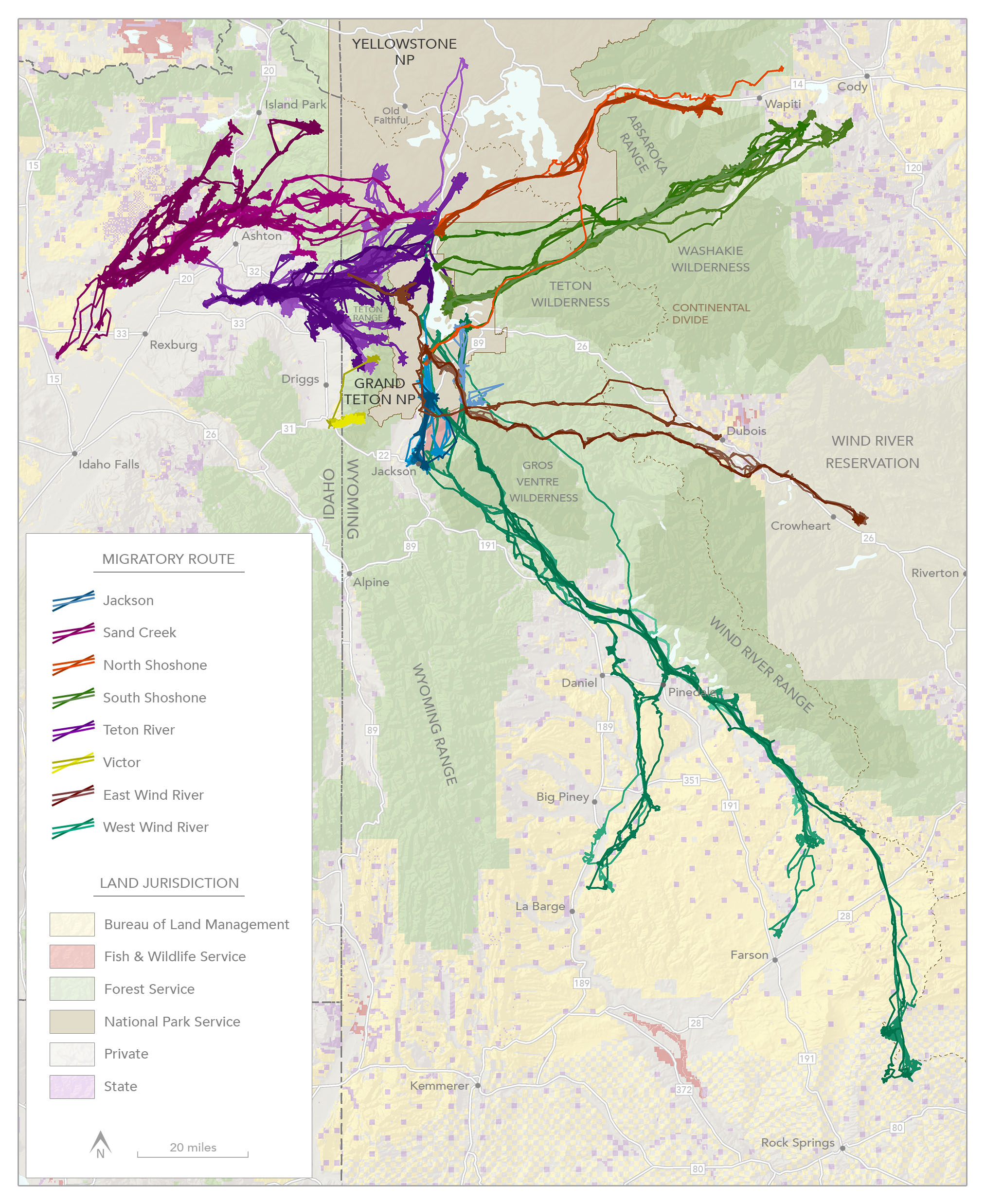
Migration distances vary dramatically across the West. Some herds move only a few miles, while others embark on epic journeys exceeding 150 miles one way. The famous Red Desert-to-Hoback migration in Wyoming, for example, spans more than 240 miles—one of the longest land migrations in the Lower 48.
Timing also varies by region and weather. Most deer begin moving downslope in September through December, and head back to their summer ranges in March through May, depending on snowpack and temperature patterns. Some deer spend two to four months migrating, often pausing for days or weeks in key stopover areas to rest and feed.
The Challenges Mule Deer Face
Migration is full of obstacles. In many places, the routes mule deer depend on are becoming fragmented by human development. Each barrier—a fence, a road, a subdivision, or an energy field—chips away at their ability to move freely and safely. Nature is hard enough as it is. Adding man-made components makes that even worse.
1. Energy Development
Studies show that mule deer avoid developed gas fields and well pads, even a decade after construction. When forced to speed through or detour around these developments, deer lose access to critical forage and stopovers. Over time, that reduced access translates to lower body condition and smaller herds.
2. Vehicle Collisions
Highways cut directly across many migration corridors. Collisions are a serious source of mortality for both deer and drivers. Fortunately, wildlife crossings—overpasses and underpasses—have proven to be highly effective. In Wyoming, thousands of mule deer use these crossings each year, reducing collisions and reconnecting historic routes.
3. Fences
Traditional livestock fencing can be lethal for migrating deer. Low bottom wires trap fawns, and tall or woven-wire fences can block entire herds. Replacing or modifying fences to wildlife-friendly designs (with smooth, raised bottom wires) is one of the simplest and most effective ways to restore movement.
4. Urban Expansion
As rural development spreads deeper into mule deer country, the landscape fills with fences, pets, roads, and human disturbance. In some areas, deer have simply abandoned traditional routes that became too risky or impassable.
Migration Corridors: The Arteries of the West
Each migration corridor serves as a critical bridge between the ranges that sustain mule deer year-round. Lose the bridge, and you lose the connection—and eventually, the herd. Because the largest and healthiest mule deer populations are migratory, conserving these corridors is vital for the species as a whole.
Thanks to modern GPS tracking, biologists now have detailed maps of these routes, stopovers, and bottlenecks. This data allows managers to identify where conservation work can have the biggest impact—whether it’s through fence removal, road-crossing structures, or land-use planning that prioritizes open movement.
Why Some Mule Deer Don’t Migrate
Not every mule deer takes the long road. In areas where snow is mild and food remains available, some deer adopt a resident lifestyle, staying put year-round. These resident populations can coexist with migratory herds, each strategy offering trade-offs between energy conservation, forage quality, and survival risk.
The Importance of Helping and Conservation
The future of mule deer migration—and mule deer hunting—depends on what we do today. Every hunter, landowner, and outdoorsman has a role to play in keeping these ancient movements alive.
Migration corridors are more than pathways. They’re arteries of life that connect the mountains, valleys, and deserts of the West. When they’re broken, the entire ecosystem suffers. Mule deer are not only icons of Western wilderness—they’re indicators of how healthy that wilderness truly is.
Here’s how we can all make a difference:
Learn your local corridors. Understand where migration routes cross your area and give deer space during key travel seasons.
Drive with awareness. Slow down on migration-prone roads in spring and fall, especially at dawn and dusk.
Support conservation groups. Organizations like the Mule Deer Foundation and Muley Fanatic Foundation work year-round to protect migration routes and improve habitat.
Volunteer for habitat projects. Join local efforts to modify fences, restore winter range, and improve water access.
Advocate for conservation-minded policy. Speak up for land-use decisions and wildlife crossings that preserve connectivity.
Protecting migration isn’t about sentiment—it’s about stewardship. It’s about recognizing that these deer rely on landscapes far larger than any one of us controls. When we commit to keeping those pathways open, we’re ensuring that future generations will witness what we do now—the timeless sight of mule deer moving freely across the open West.
Recommended Resources for Learning More
Check out Organizations like the Mule Deer Foundation and Muley Fanatic Foundation. The WAFWA is another great resource for mule deer facts. Also do research on state wildlife websites, especially for the state you live in. There is a lot of information to study on these websites. I also encourage asking questions. Never be afraid to email myself or others to learn more.